

April 15, 2009

Anne, Duchess of Hamilton : the dress of a great seventeenth century Scottish lady.

Anne, 3rd Duchess of Hamilton was born into one of the wealthiest and most powerful Scottish families in Whitehall, London in 1631. King Charles I was her godfather. Due to the deaths of her brothers, father and uncle (the latter two in battles defending the King) she personally inherited the vast Hamilton estates in 1650. These spread across the West of Scotland from Arran across Clydesdale to Lanark and beyond.

Anne, 3rd Duchess of Hamilton

A portrait said to be of Anne as a child (known as “One of My Lord’s Six Children”) shows her wearing sober dress of black and white with full, slashed sleeves and lace collar, bodice and cuffs. The waist is high and circled with a plain black ribbon. She also wears a plain white bonnet (perhaps of linen). Her simple dress possibly reflects her father’s Presbyterian views. It certainly contrasts with the colourful dress in the famous Van Dyck portrait of King Charles I’s children painted at a similar date. Nonetheless Anne also wears a fashionable fine pearl choker befitting her noble status.

She survived the turbulent years of the British Civil War, including the execution of Charles I and the Commonwealth period when Oliver Cromwell disinherited her and divided her lands between his allies. According to a much later account it was claimed that she existed during this time due to the financial support of her companion, Miss Maxwell of Calderwood. A skilled seamstress, Miss Maxwell earned their keep with her needlework. After Anne’s estates were restored to her by King Charles II in 1661, she rewarded her loyal supporter by giving her Craignethan Castle.

In 1656 Anne married William Douglas, 1st Earl of Selkirk. Theirs was an affectionate union and produced 13 children. Anne was a devoted wife and mother and her good works on the Hamilton Estates throughout her long life earned her the epithet of “Good Duchess Anne.”

A staunch supporter of the monarchy Anne was also a stalwart Presbyterian. This led to a delicate political balancing act for her and her husband. Although Scotland and England shared a ruler in King Charles II, they still had separate parliaments until 1707. Much of Scotland resisted the lavish displays of the royal court in London and objected to the King’s harsh treatment of the Presbyterian Covenanters who opposed his attempts to impose Episcopal authority.

This internal divide was reflected in the dress of the Scottish nobility during the early Restoration Period. While some adopted the opulent costumes popularised at the English Court, others showed their neutrality or opposition by wearing more sombre, Puritanical fashions. Interestingly, Duchess Anne and her husband represented both sides of this divide. While the politically ambitious Duke William took care to dress in all the magnificence of the latest London fashions, Duchess Anne’s strong religious faith was reflected in the modesty and simplicity of her everyday dress. However, it was always made of the finest materials to reflect her high social status.

Her main home was Hamilton Palace, considered second only to the palaces of royalty in its scale and the splendour of its furnishings and architecture. In fact, under her charge it became the largest private residence in the western world at that time. It stood on The Low Parks, on the Clyde Valley, (not far from the then still small town of Glasgow) until its demolition in the nineteen twenties. Fortunately, the Hamilton archives survive, consisting of thousands of letters and documents. These record in fine detail the lives and belongings of several generations of this great Scottish family.

The Palace had between thirty and fifty servants at any time. The Duke had a valet-de-chambre to dress him, care for his wardrobe and wigs and to shave him. Likewise the Duchess had her ladies, who were usually addressed as ‘mistress’ out of courtesy. The footmen, coachmen, postillions, grooms and pages wore an impressive red livery to reflect the status of the Duke and Duchess.

Another valued employee was the washerwoman and contrary to modern wisdom hygiene was highly valued by the nobility of this time. Items such as handkerchiefs, and the Duke’s cravats, linen shirts and underwear were washed at least every second day. In 1696 a mangle was purchased for the washhouse, a very recent innovation, in order to help dry the linen and other items. The Duke and Duchess also took pains over their personal hygiene and purchased quantities of soap, sponges, items for cleaning their teeth and scented waters such as jasmine, orange and Queen of Hungary – a combination of rosewater, rosemary and spirits of wine.

While the Duke used Edinburgh tailors until the early 1670s, thereafter he purchased most of his clothes during his trips to the London Court. His coats and breeches were lavishly embellished with costly gold and silver lace as well as gold buttons. He had suits made of velvet, waistcoats of gold brocade and an impressive purple cloak lined with scarlet satin. However he did use local tailors for his linen clothes and underwear. Indeed most Scottish noble families purchased locally made linen in this period. Scotland excelled in its manufacture and also exported it to England and Europe. Linen drawers and linen cuffs both cost him 4 shillings while a waistcoat of linen was more costly at 10 shillings.

Sewing was considered one of the rather limited number of pastimes which were suitable for a noble Scottish lady.Anne and her daughters personally sewed the linen shirts and nightclothes of the Duke and his sons.

Anne was far less extravagant in her everyday dress than William. Her preference was for black gowns and in memory of her late father and uncle she wrote that “mourning…is most suitable for me.” In this she sometimes found herself at odds with William who sometimes undertook to shop for her on his trips to London. This was where her finest gowns for grand occasions were acquired. In 1678 she requested that he buy her a black gown, dark mantua and dark petticoat. Undaunted the Duke returned with a scarlet satin petticoat and brightly patterned dresses instead! Anne’s reaction was not recorded.

A male servant also carried out errands for the Duchess in London, even buying her linen petticoats and stays. Although this may seem surprising it was not unusual and indeed all stay makers at this time were men and it was considered quite normal for noble ladies to be measured and fitted for stays by men.

Despite these London forays on the whole Anne’s dresses were made locally of dark colours and simple designs. Her preference was to shop for material in Edinburgh which had the finest selection in Scotland. She would usually visit James Row’s shop there and select from the silks, muslins and calicos (printed linen or cotton) available. Even the sober Anne could be extravagant however, for example she purchased a sable tippet for £36 and an ermine muff for £21 (each representing six months income or more for a typical middle-class family of the time.)

Anne’s dresses were usually made up by palace employee John Muirhead who bought the necessary accoutrements such as pins, thread and buttons at the local shop of Gilbert Hamilton. It was also John Muirhead, not a ladies maid or seamstress who made the Duchess’s petticoats and waistcoats (bodices worn above the petticoat) to be worn beneath the gowns. Sometimes made of silk, cloth of silver or satin these were more usually made of linen or flannel. Fine Scottish ladies at this date did not wear drawers – they were not considered at all respectable.

Two fine portraits of Anne as an adult survive. The first was painted by David Scougall sometime in the early Restoration period. For her portrait the Duchess sports a sumptuous silk or satin dress in sky blue. The low neckline drops to show the top of her shoulders and has a narrow white frill. The bodice is stiff and tapering and probably has a boned underbodice beneath or is boned itself. It probably drops to a full skirt with several petticoats underneath. The stiffness of the bodice contrasts with the extravagant puffed sleeves which billow out from the shoulder and are clasped back beneath the elbow to reveal the full white sleeves of her satin or linen shift beneath. Draped across her right shoulder and falling to her waist is a contrasting sash or loose shawl of burgundy purple, perhaps to further indicate her noble status. Her dark brown hair is smoothed back from her forehead and elaborately ringletted in the style made fashionable by Queen Catherine, consort of Charles II.

The clasps on her sleeves appear to be made of jewels or a precious stone such as onyx. She is also adorned at the neckline of her bodice with a traditional black cruciform brooch with three large pendant teardrop pearls. The cross may be made of onyx or even black diamonds and may be attached to the dress. Jewels were often sewn directly to gowns in this period, although by later in the seventeenth century they were more commonly worn separately as necklaces, chokers, bracelets and brooches. A great pearl choker is fastened round her neck and large pear-shaped pearls are suspended from her ears.

Even for her everyday dress Duchess Anne had a fine selection of jewels to choose from and it seems to be the case that even the most Presbyterian and puritanical Scottish noblewomen never felt the need to eschew wearing their dazzling jewelry. Diamonds and pearls were the most favoured pieces, the larger the better. In addition to her fine pearls Anne owned bejewelled pendants, necklaces, bracelets and crosses including a fine emerald crucifix. She had rings of diamond, emerald, ruby and sapphire as well as semi-precious pieces in cornelian, agate and coral. Like other ladies of her station she also possessed many loose diamonds ready to be made up in pieces according to the latest fashions. She often sent the Duke on errands to Richard Beauvoir, the favoured London jeweller patronised by the Queen.

In addition to her jewellery Duchess Anne also possessed a watch, another rare and costly possession (the Duke paid £60 for his repeating watch in 1693). She wore it suspended from an ornate gold chatelaine hook, presumably worn around her waist. The hook is inscribed with a date of 1687 and still survives in the Hamilton Collection.

The second, more famous portrait of Duchess Anne was painted by court painter Sir Godfrey Kneller in 1679 as one of a series of studies of her family. Once again she has abandoned her customary sombre dress for the fashionable ‘deshabille’ of the period. By this date stiff bodices had given way to a much looser gown, known as ‘undress’. This was mainly worn only indoors and was not considered acceptable for outdoor wear. Later it would evolve into the fashionable mantua, acceptable even at royal balls by 1700.

A loose nightgown was worn over a smock of linen or silk. Anne again wears a blue gown, but this time of a shade closer to grey. While it was most fashionable to have the gown open at the front to reveal a decorative, embroidered corset Anne preserves her propriety by keeping it resolutely fastened up. The low neckline has a substantial frill of white smock above it with wide sleeves to the elbow and the loose puffed sleeves of the shift below which are gathered just above her wrists.

The loose gown is fashionably split from her breastbone to her waist, once again revealing the smock beneath. The skirts of the gown flow loosely and drape around her so that the shapes of her legs can be seen beneath it. Her hair is again fashionably high and curled, with a long single ringlet flowing down to her shoulders. As in her previous portrait she is adorned with pearl earrings and a great pearl choker.

Interestingly, in the very year in which this painting shows her as a typical lady of Charles I’s court Anne sheltered the defeated Covenanters (Presbyterians) from government troops after the battle of Bothwell Brig. They fled to the grounds of Hamilton Palace for sanctuary and Anne offered them her protection. The Duke of Monmouth, commander of Charles’ army, received a polite request from her not to enter her grounds “lest he disturb the game [birds & hares]”.He agreed. In this way she saved the lives of the Covenanters who would otherwise have been put to the sword.

Anne outlived her husband and many of her children but no further portraits of her survive. When she died, aged 84, in 1716 she had a simple funeral at her own request, in keeping with the preference she showed throughout her life for modesty and sobriety. Nonetheless she performed her role as Duchess impeccably throughout her life and navigated the challenges of balancing her personal beliefs with the expectations of her station in often turbulent political times. The way in which she and the Duke dressed and portrayed themselves in daily life, in paintings and at Court played a significant role in this. Her line continues to this day and the modern Dukes of Hamilton.

Permalink • Print • 1 Comment

April 3, 2009

The Renaissance Dancers

The Renaissance Dancers are based in Southwark, London, site of historic Tudor theatres such as the vanished Rose and the rebuilt Shakespeare’s Globe. Originating from the Shakespeare’s Theatre Friends Association the group was founded in 1999. They regularly stage stunning displays of elaborate period dances. Although the members are amateurs they have been trained by professionals. The all-female group specialises in dances of the Elizabethan period, inspired by the Queen’s own love of dancing with the ladies of her court.

The Renaissance Dancers

Their costumes are those of the upper gentry. Some are handmade by members while others were made by professional costumiers and students of the London College of Fashion. All are made using traditional fabrics and techniques. According to Gwenneth Bransbury-Zachary, head of the group costumes play a very important role in getting into character for the dances “because, for a start, the constriction of the corset aids the required poise.”

The group mainly performs stately and sprightly dances. Stately dances include pavanes, a slow processional dance and almains, also known as allemands a dance for couples at a moderate tempo. Both of these dances are performed in a grave, ceremonious style.

Sprightly dances are the country dances recorded by John Playford a century later in his influential book of 1651 “The English Dancing Master”. This includes around a hundred dances. Although entitled country dances these were actually intended for the middle and upper echelons of society. These are performed in a stately manner.

Bransbury-Zachary explains “Galliard and La Volta are the dances most famous in the period, especially La Volta because of its risqué nature [during the dance ladies jumped in the air, and some considered it disgraceful that their knees were visible]. These dances require a huge amount of skill and we do not believe amateurs can perform them without looking ridiculous.” Queen Elizabeth herself was said to excel at both of these intricate dances.

Authentic costumes of the period influence the manner of dancing “the corsets for poise and the width of skirt for negotiating dance patterns and other dancers.” The dancers gain inspiration for their costumes and hairstyles from contemporary paintings from the late Elizabethan period.

Dress was an important indicator of social status and the Renaissance dancers wear ornate gowns of fine fabrics and rich colours with pristine white ruffs and imposing stand-up collars. The dresses sweep out majestically over farthingales, adding to the visual impact of the stately movement. Even fine details are essential for authenticity. This extends to the use of linen for undergarments and accessories.

Smocks or chemises of medium linen are worn beneath the dresses next to the skin. Smocks are usually quite simple designs with a simple neckline and long sleeves with a knee-length skirt. Necklines could be square-cut, high with a gathered shirt or high with an ungathered shirt. Sometimes the neckline shows above the neckline of a dress. For women of high status the smock might well be finely embroidered. It could also have gathered cuffs or linen cuffs sewn on separately. The Elizabethan Dancers use fine linen for their collars and cuffs.

Medium linen is also used for their coifs. Coifs are caps which came in a variety of designs and covered the whole of the head. As with smocks they might have a decoration of blackwork embroidery. In addition to keeping hair in place and providing warmth a coif was an essential element of any respectable woman’s dress. It was usually fastened beneath the chin and would be topped with a grander piece of headwear such as a tall hat or wired veil.

Dance played an important role at court and in society in the Renaissance. It served a ceremonial as well as a social purpose and featured heavily in the elaborate Masques of the period which helped to enforce the Queen’s cult of personality. Like her father, King Henry VIII, Elizabeth also had a genuine fondness for music and dance. She was both a skilled practitioner of the lute and the virginals and an accomplished dancer herself.

According to Bransbury-Zachary the Renaissance Dancers “aim to bring the Elizabethan period to life through dance and associated activities for students of all ages.” Their painstaking hours of practice, skill, meticulous attention to historical accuracy and genuine passion for all things Renaissance shine through. To see one of their graceful and visually sumptuous performances, especially in the heart of Elizabeth 1’s great capital city, is to be transported back to the court of the Renaissance era.

Permalink • Print • 1 Comment

February 10, 2009

A limited time sale on finer quality medium weight linen

A finer quality medium weight 100% linen just arrived and went on sale!

It still weighs the familiar 5.3 ounces/yard2 and can be used to make everything medium weight linen is used for.

The thread size used in 1C64 is thinner than the thread used in other medium weight linen fabrics.

In order to get finer thread, long staple linen had to be used.

Long staple linen fiber is usually reserved to make handkerchief linen. It is the reason handkerchief linen is incredibly smooth to the touch and has fewer picks and chaff.

With thinner thread and to keep this linen fabric a medium weight 5.3 ounces/yard2, the thread count was increased 10% making this cloth denser than other medium weight linen. The higher thread count makes 1C64 shrink less.

The quality of yarns and the change in construction gives 1C64 a very smooth surface and a more lustrous feel. These qualities are what make 1C64 linen the top pick when choosing linen for personal items that are meant to be close and used on the daily basis.

This fabric is ideal for embroidery and other delicate projects. It has been used for hand towels and napkins with embroidery and hemstitch in monasteries in US as well as Europe.

Since it is a medium weight, it can also be used for garments, bedding, table linens, curtains, and hand towels.

Receiving requests from you for finer, but not sheer linen fabric we brought the 1C64.

This fabric is where quality meets great price.

For this week only, until Sunday February 15th - this fine quality medium weight linen is 10% off.

Enter here to go directly to the discounted middle-weight 100% fine linen and save 10%!

Permalink • Print • Comment

January 29, 2009

The Elements of Celtic Costuming

Whether you need a costume for a renaissance fair or a Celtic festival, Scottish and Irish clothing is a versatile choice. There are a few key differences in the costumes worn by the Celtic people as compared to the English style clothing seen at many fairs. Among the Celts, there are also a few noteworthy differences between the Scots and Irish styles.

Most people have an image of the kilt in their heads when they think of Scotland. While the kilt has been popular with the Scots for several centuries, the original bears only a passing resemblance to the well tailored dress items of today. The Great Kilt was made from a length of fabric measuring two yards by five yards. A leather belt would be laid out on the ground then the fabric would be placed flat upon it. Pleats would be folded in at the middle top to fit the owner's waist measurements, then they would lay down and close the loose flaps over themselves. One side was often left long so it could be draped over the shoulder. This is still a simple way to make a kilt today that doesn't require any sewing. For an Irish man's costume simple form fitting trews made of twill or wool will suffice. Irish style trews are not as tight as the European styles. They can be knee or ankle length, and have either a flared bottom or can be fitted.

Traditionally the shirt worn by both the Scots and the Irish is the léine. Unlike similar Elizabethan items, the léine is not an undergarment. For men the léine is a loose fitting tunic that nearly reaches the knee. For women it is at least ankle length and can reach to the ground if one wishes. Almost all historical references to the léine say it is made of linen and is either off white or saffron yellow in color, with saffron being the most popular. For men a kilt or trews and a léine is a complete outfit, though a linen doublet can be added if one wishes.

Over the léine women wear an overdress. The most popular style is the kirtle. This is a simple fitted linen dress that is as long as the léine or a few inches shorter. The kirtle usually has only thick shoulder straps as the léine provides the sleeves. For Irish dress, you would 'kirtle' the skirt. This is done by wearing an underskirt in a different shade and tucking the skirt of the overdress up into the belt to show off this flash of color. For either an Irish or Scots costume, the Shinrone dress is also a common style. This is similar to the kirtle with the exception that it laces up the front. A Scots style overdress is usually not kirtled into the belt. Both the kirtle and the Shinrone are made of linen in muted colors. Browns, muted greens, and dull saffrons are all acceptable. Scots women sometimes drape an earasaid, a tartan shawl, around their shoulders. This is usually made of wool and is perfect if you will be in costume on a chilly day.

In both Scotland and Ireland married women covered their hair with a kertch. This triangular headdress is made of linen and is tied around the hair. The simplest way to make a kertch, known as a brèid in Gaelic, is to take a 1 yard by 1 yard square of fine linen fabric and fold it in half to form a triangle. Place this triangle on your head with the center point in the back and tie the two loose ends under your hair. Then, continue twisting the loose ends and pull them around to the top of your head where the front of the kertch meets your hair and tie in a knot in the center. Tuck the ends under the kertch, thus forming a head band to hold the kertch in place. If you wish, you can do a bit of embroidery, knot work being a good choice, on the part of the triangle that hangs loose in back. Linen is well suited to embroidery. If you are unmarried then the hair should be worn long and uncovered.

For all Celtic clothing, linen and wool are the fabrics of choice. The léine is always made of linen for both men and women. The trews or kilt for the men are wool, plaids for the kilt and earth tones for the trews. Overdresses, doublets, and the kertch should be of linen, using a tighter woven linen for an upper class costume and a looser weave for working classes and peasants. By using these traditional fabrics in your costume, you will be able to add a touch of authenticity and a lot of comfort.

Permalink • Print • Comment

December 11, 2008

Classic with a Twist

The classic straight suit with a floral print lining, the multi-coloured stripe on a men’s sock, the ‘well-made, good quality, interesting fabric, easy to wear. No bullshit clothing.” This is the style of Paul Smith.

Paul Smith has become known for taking traditional British tailoring to the younger slicker crowds by incorporating classic design with a quirky underlining. He takes the traditional and mixes it with the modern to create a look that is forever fresh and sought after. "It is as though he possesses some inner equivalent of the Houndsditch Clothes Exchange - not a museum, but a vast, endlessly recombinant jumble sale in which all the artefacts of his nation and culture constantly engage in a mutual exchange of code," writes the US novelist William Gibson of the Paul Smith style.

Paul Smith

It all started in the 1960s. As a young lad, fresh out of school, Paul Smith was summoned by his late father Harold Smith to work as an errand boy in a local Nottingham clothing warehouse. Smith had little interest in fashion at that point, following one star as his rising dream to become a racing cyclist. Little did he know he was to become the single most consistently successful British designer with an estimated £300 million company revenue as of 2006, selling products in over 200 shops worldwide.

In his late teens, an accident left Smith unfit for the cycling career, which in turn allowed his life to take another turn. He began to mix with the art college students “and became interested in things like art and fashion.” What seems incredible is that some 6- 7 years later by the tender age of 24, encouraged by his then girlfriend, (now wife) Pauline Denyer, Smith took the risk and put down his hard-earned £600 savings to open his first shop.

Paul Smith Vêtement Pour Homme opened its doors in 1970 onto the back alleys of Nottingham. It was the only shop to sell Kenzo and Katherine Hamnett outside of London at the time. Paul Smith Vêtement also began to sell Paul Smith’s own simple designs, which he manufactured locally. From there on it was an escalating spiral of hard work and great achievement.

His first shop in Covent Garden opened in 1979. It took Smith three years to gather the money to renovate the shop from its original bakery premises. Once finished, it was a work of art, selling Smith wear, designer furniture and quirky gadgets that Smith would find on his travels. One of his most successful finds was the Filofax- a leather bound organizer, which he found tucked away in the East End of London. It is now known and sold worldwide.

Today Paul Smith has 12 different collections from Men’s Wear to Fragrance, Watches to Paul Smith Furniture and ‘’things’. His products are sold in 35 countries with 500 wholesale customers in Japan alone. What seems to be recurring in his career is very much the hands- on, pro- active moving forward. Another, is a clear thinking ahead and an open mind to predict the next best thing to buy. Whether a Japanese magazine, or a cool swiss knife, Paul Smith wasn’t just selling clothes, at different decades his customers were to engage within the ever-relevant Paul Smith life style. "

The reason I've been successful is because I've just got on and packed boxes and I know that VAT means Value Added Tax not vodka and tonic," Paul Smith writes in his 2001 first released book ‘You can find inspiration in everything’. "I've sold on the shop floor, I've typed invoices. At some point I've done everything, and I've always kept my head above water financially. Nevertheless I'm extremely nervous about becoming a businessman and not a designer."

Permalink • Print • Comment

October 29, 2008

Linen Duvet Cover

Size: Queen. Width - 86". Length - 86"

Whether you are remodeling your bedroom or just wanted to try something new this project will be perfect. Linen it is an ideal fabric for bed linens for a couple of reasons: the way it circulates air will help you stay cool in the summer and warm in the winter, and requires little maintenance since it is very easy to wash and iron.

The sample duvet cover we decided to make is striped; this way there are more colors to choose from if you are interested in making matching curtains or pillowcases. We offer a couple of different color schemes you could work with and you can find them in the tools section of the magazine.
This cover is very simple to make so let's get to it!

The pattern for the cover consists of four parts:
1) the center piece of the top
2) the left and right sides
3) the center piece of the bottom
4) the zipper.

Necessary things for the project:
1) scissors
2) sawing needle
3) iron
4) ironing board
5) ruler
6) chalk
7) sewing machine
8) over-lock machine (if you don't have a machine that does it you can do this by hand)
9) four small white thread spools
10) striped fabric - 11yd ( or any other color you choose for your duvet cover)
11) zipper - 57" long

Pattern pieces:
1) center piece for the top - 87" x 57"
2) center piece for the bottom - 87" x 57"
3) side piece#1 - 87" x 32"
4) side piece#2 - 87" x 32"

Before cutting out the pieces straighten out the fabric. To do this you need to get a piece of thread near the edge of the fabric going horizontally and pull it all the way through. Now you can see the straight line where you should cut your fabric before making any patterns. Next- iron the fabric.

Description to Picture #1:
-Use the chalk to draw out the shapes for all four pieces.
Piece 1 & 2 - 87" x 57"; piece 3 & 4 - 87" x 31".
- Cut out the pieces.

Description to Picture #2 (the sewing of the cover):
-Use pins to connect pieces - 1 & 4, 4 & 2, 2 & 3, 3 & 1.
-Use the sawing machine to saw the four seams.
-Use the over-lock and stitch up the ends of the fabric on those seams.

Description to Picture #3:
- Iron the seams towards the center of the pieces 1 & 2.
- You now have only two sides left un-sawn the top and the bottom.
- Saw up the top side, the one that will go towards the head, and use the over lock to fix the edges.

Description to Picture #4:
- The bottom side that goes towards your feet is where we put our zipper.
- Saw up only the sides of pieces 3 & 4.
- In the opening that is left, we are going to put the invisible sipper by sawing it in with the one-sided sewing foot
- Turn the cover right side out.
- Iron it.
- Your duvet cover is ready!

Congratulations, you have now made a beautiful duvet cover all by yourself.

Permalink • Print • 1 Comment

September 29, 2008

Romantic Era Linen Clothing

It’s impossible to even consider attending a Romantic era re-enactment without first understanding the importance of linen in Romantic era clothing. Linen, made from the flax plant, has long been an important fabric. Throughout history it has been know for its versatility. In the romantic era, from 1825 to 1835, linen was used in many different types of clothing, particularly undergarments.

Linen pantalettes were the undergarments of choice for the ladies of the Romantic period. Unlike drawers, pantalettes were longer. Usually they came down to the woman’s knees. They were also commonly decorated. Those who could afford it sometimes had silk pantalettes, but linen was the material of choice for the lower classes.

Another linen item, which a lady of the Romantic era would wear, was a stay. Stays, which are also known as corsets, came back into fashion in the Romantic era, because more emphasis was placed upon the shape of a woman’s waist. Stays were made from multiple layers of cloth, usually linen, with whalebone in channels in between the layers. Romantic era stays, unlike their counterparts from other time periods, were not meant to crush a woman into a false shape. They were only designed to draw attention to a woman’s natural figure. In fact, Romantic era linen stays had gussets at the hips, giving them a rounded appearance, rather than trying to flatten them out.

Depending on the time of year, a woman’s wardrobe changed. Over their linen stays women wore linen chemises and waist petticoats, which were also usually made of linen. However, in winter or outdoors women wore multiple linen petticoats for extra warmth and to support the weight and shape of their over garments. Over garments were generally made of other fabrics, such as wool. Since wool is scratchy to the touch, linen provided a layer of comfort.

When considering Romantic era linen in costumes, we can’t forget the gentlemen either. Men in the Romantic era often wore linen undershirts, for similar reasons to women. Linen was warm, comfortable and easily cleaned. Men’s linen shirts of the time were typically bleached white. Sometimes the shirts were made of muslin, but that was generally reserved for higher classes. Over their linen undershirts, men sometimes wore roll collar vests. Such vests were sometimes made out of linen as well, although they could also be made out of wool, muslin or silk.

So, whether you are looking for Romantic era costumes for men or for women, keep linen in mind. A lot depends on whether you want to portray more common folk or higher classes. No matter what you decide, you'll be sure to find linen fabric to match your re-enactment project at www.fabrics-store.com

Permalink • Print • Comment

September 5, 2008

Edwardian Linen Uses

Linen was a very important fabric, in Edwardian times. So, if you are planning to attend an Edwardian re-enactment any time in the near future, you should understand a bit about linen and its Edwardian uses, first.
Linen has been around for a long time. It was even used in ancient Egypt. It is one of the earliest fibers to be used for such things as making string and cloth. Linen varies in both quality and price. Sometimes it can be soft and pliable. Other times it can be rougher, like canvas.
In Edwardian times there was a major change in the styles of women’s underwear. Previously, underwear had been chiefly made of linen and generally unseen. It was for practical use only. However, in the Edwardian era, underwear suddenly switched to colorful garments featuring lace and chiffon. Lingerie was suddenly for show, not just function. However, that doesn’t mean that linen lost all importance in Edwardian fashion.
On the contrary, linen never went out of style. Edwardian walking suits were often made of linen. They were so fashionable, in fact, that they are just as beautiful and fashionable today as they were then. Linen suits of the period wore well. They were strong and sturdy, yet still pretty and stylish. Children in Edwardian times sometimes wore linen coats. Often they had buttons in the front and sometimes they featured embroidery and embellishment.
What outfit would be complete without a hat? Certainly not an Edwardian outfit! Often, ladies wore linen motoring hats. Linen motoring hats came into fashion when automobiles went into production, out of necessity. Ladies did not want to get their hair dirty or disheveled, when riding around town. However, just because an item is necessary, doesn’t mean it is not fashionable. Many Edwardian linen motoring hats featured bright colors, elaborate embroidery and silk ribbons, used for both decoration and to keep the hat secure. For re-enactment purposes, it is fairly easy to find suitable examples of Edwardian motoring hats. You can find the exact linen match for your re-enactment project at www.fabrics-store.com.
Linen use in Edwardian times does not stop there, either. It was also used for dining. Linen was commonly used to make napkins and tablecloths. Linen also had uses in other areas, such as sheets and pillow coverings. Aside from the practical household uses, linen was also useful for other things. For instance, Edwardian women often used parasols made out of linen.
So, whether it’s suits, hats, napkins or parasols you’re after, you can’t go wrong with linen. Make your Edwardian re-enactment experience as authentic and accurate as possible by finding appropriate linen costume items. You can't go wrong if you shop at www.fabrics-store.com. That way, you’ll be sure to enter into the situation prepared. After all, there’s nothing worse than showing up to a re-enactment in modern clothes.

Permalink • Print • Comment

August 20, 2008

Linen Use in Tudor Garments

If you are planning to attend a Tudor era re-enactment, you will want to have the proper costume.  Before you search for suitable costumes for your Tudor re-enactment, you need to decide exactly what it is you’re looking for, though.  You might start by thinking about linen.  It was a very important fabric in the Tudor era.

 For women of the Tudor era, underwear consisted of a linen shift, also known as a smock or chemise.  Chemises were basically like a petticoat, which went under their dress.  Dresses were generally made of wool in those days.  So, the linen undergarment protected a woman from the scratchiness of wool, since linen is softer.  For men, linen was made into an undershirt and braces.  Hose, or stockings, for both sexes were also made of linen, often times.

 The softness of linen was used to the advantage of Tudor era men and women in multiple other ways as well.  Although most outer clothing was made of wool, most of it was lined with linen.  So, it was used for both comfortable and practical reasons.

Another use for linen in the Tudor era was in the making of coifs, or head coverings.  They were thought to protect a person from head lice and they were used as a sign of reverence, keeping one’s head covered in God’s presence.

Another use for a linen coif was to keep a woman’s hair hidden.  Tudors believed that a woman’s hair would make a man more passionate.  Married women were expected to keep their hair hidden under a linen coif, except in the presence of their husband.  A woman who walked in public without a linen coif was considered to be a hussy. 

The Tudors also used linen as a sign of social status.  There were different grades of linen.  Finer linen fabric was reserved mainly for richer classes.  The better the quality of the linen, the longer it took to make and the more expensive it was.  In some ways, that actually worked to the advantage of the poorer folk.  Rough, heavy linen was warmer for doing field work.  If you were very rich, in Tudor times, you might have been able to afford cotton or silk, instead.  Linen was vital to the lower classes, though.

 No matter what class a person belonged to, it was always expected that linen undergarments be kept clean.  In its raw form, the linen was an off color.  So, it was often bleached.  Bleaching linen, in those days, was done by soaking it in urine to whiten it.

 Linen fabric was also used for other things, such as tablecloths, in Tudor times.  So, it was really an indispensable resource.

 When you are preparing for a Tudor re-enactment, be sure to do some research.  Decide whether you wish to portray a lower or higher class citizen, first.  You can find the exact linen match for your re-enactment project at www.fabrics-store.com.


Permalink • Print • 1 Comment

The Fabric That Can Be Shaped into Anything You Design!

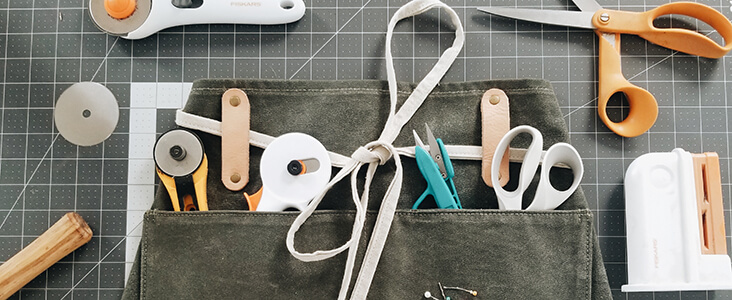
If you sew, you probably know how frustrating it is to have the fabric slip through your fingers, fray every time you touch it and just make it nearly impossible to sew a neat seam.

Well, what if I told you that I know a secret fabric that won't try to wiggle away from you?

Yesterday I talked to a professional seamstress who has worked using my linen for the last decade. Casually, I asked: what is the most comfortable fabric to work with that can easily be shaped into what you have designed?

Finishing the last fold to the tablecloth she was putting away, she calmly replied:

"Well your IL019 of course. It doesn't slip under your fingers when you sew, it doesn't fray and allows for the most perfect seams."

Coming from an expert like herself, a seamstress with two decades of experience, I was thrown off by the simplicity of her response. She continued in further detail, explaining to me how she feels the most at ease working with this fabric.

As a seamstress, her hands are her most valuable asset and are always toiling graciously with the fabric of her choice. It is of great value to ensure her hands don't get tired keeping the fabric from turning into thread.

The comfort of having a firm hold on the fabric without it tiring her fingers because of its constant movement and fraying is a quality she immediately noted in IL019.

She explained how relaxed she feels knowing that she has no need to worry about the weave coming undone as she runs a pair of scissors through this linen. How she can let the blades hug the fabric on both sides and let them run smoothly towards the other end.

In fact, she recommends IL019 for beginners and experts alike. Praising both the golden middle-weight as well as the soft, smooth feel the fabric has on her fingertips.

Returning to her seat, she smiled and ran a piece of IL019 through her fingers:
"I've made just about everything with this… blouses, shirts, pants, dresses, summer suits, skirts, night gowns, baby clothes, fabric dolls, quilts, lamp shade covers, bed sheets, pillow cases, duvet covers, table cloths and so, so many other things."

She continued to explain to me how linen has been such an integral part of human life for so long that every day linen use presents a visual record of human history.

How linen has always been present in our private life. Be it a smudge of lipstick on a table napkin after dinner or the finest batiste linen entwined with the scents of bodies, linen keeps track of all our intimate moments whether we choose to keep them hidden or exposed.

Our linens fall victim to our every day mishaps of staining, spilling and dirtying, and yet they take on the role happily, regaining their initial purity and brilliance after every wash.

As we spoke more, it only furthered my respect for linen. I want you to share this experience with me. Be it the feeling of running your fingers over a piece of linen soon to become your most treasured garment, or simply learning how to sew, I want you to experience it today!

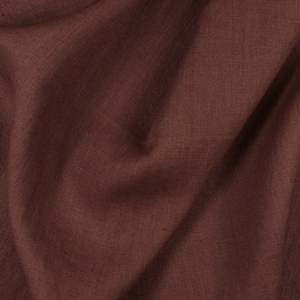
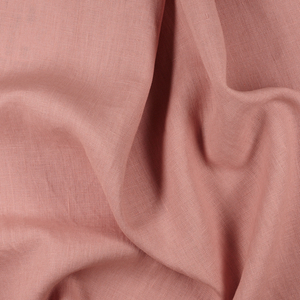
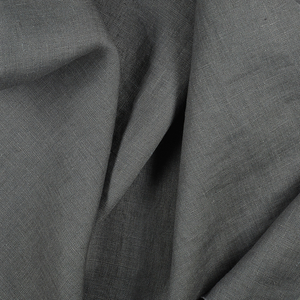
With over 34 colors of IL019 for you to choose from, there are countless possibilities:

And through Sunday the 24th any of these colors are available with a 10% discount!

Enter here to go directly to Color IL019 Special!

Permalink • Print • Comment